News
What Does a Peptide Factory Do?
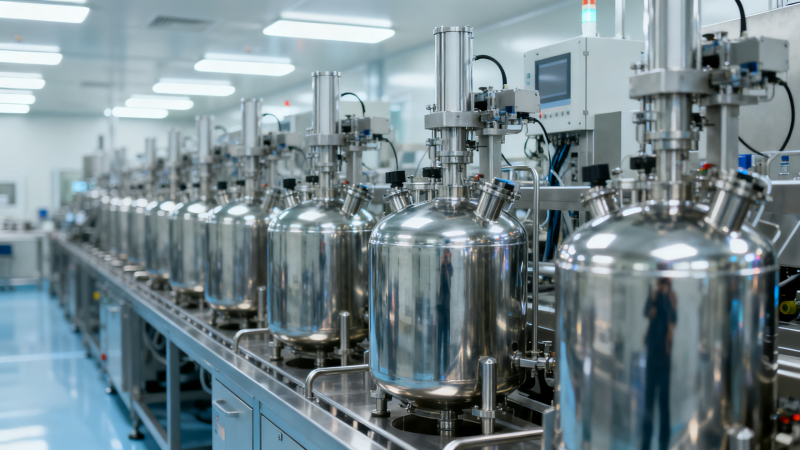
In today's biotechnology, health, and advanced skincare industries, peptides have become celebrated as core active ingredients. From cellular-level anti-aging creams to sports nutrition supplements and targeted biopharmaceuticals, peptides are highly sought after. But what exactly happens at the very beginning of this supply chain? What does a peptide factory do?
At its core, a peptide factory is a high-tech bio-manufacturing and chemical synthesis hub responsible for the development, scaling, and purification of active peptide chains.
1. Mass Production of Active Peptide Raw Materials
The primary objective of a peptide factory is to link amino acids in precise sequences or break down complex macro-proteins into functional, bio-available chains. To cater to different market sectors, factories generally deploy two production methodologies:
Enzymatic Hydrolysis (Bio-Extraction): Chiefly utilized for large-scale dietary and nutritional peptides (such as marine collagen peptides or soy oligopeptides). The factory uses specific, targeted proteases to cleave natural plant or animal proteins under controlled, mild conditions, yielding peptides that the human body can absorb without complex digestion.
Chemical Synthesis (e.g., SPPS): Primarily leveraged for high-end cosmetic active ingredients (such as Copper Tripeptide-1 or Nonapeptide-1) and pharmaceutical applications. Technicians utilize computer-programmed automated synthesizers to construct exact amino acid sequences step by step.
2. Purification, Lyophilization, and Quality Control
Raw peptides moving off the synthesis or hydrolysis lines contain standard by-products, truncated sequences, and salts. A massive portion of a peptide factory's infrastructure is dedicated to refining these raw materials:
Chromatographic Purification: Using industrial Preparative High-Performance Liquid Chromatography (HPLC) columns, the factory separates out impurities to push raw active concentrations to 95%, 98%, or even 99% purity.
Lyophilization (Freeze-Drying): Liquid peptide solutions are converted into stable, highly soluble white crystalline powders under vacuum and sub-zero conditions, significantly extending shelf life.
Rigorous Analytical Verification: Every batch undergoes Mass Spectrometry (MS) to confirm its molecular weight matches the exact target sequence. Analytical sheets like Certificates of Analysis (COA) are generated to verify that heavy metals, moisture, and microbial levels fall well within international safety compliance.
3. SEO and Paid Search (Google Ads) Compliance Standards
When configuring B2B web copy for organic SEO or setting up digital ad campaigns for international markets, compliance with advertising regulations is critical:
Focus on Industrial Assets: Center your messaging around automated production capacity, cleanroom environments, strict GMP or ISO 9001/22000 credentials, and precise purity percentages.
Avoid Prohibited Claims: Do not write copy implying that your peptide raw materials can act as medicine, diagnose physical conditions, or cure diseases. Keep the language technical, professional, and strictly anchored to raw material parameters and formulation compatibility.
- Last One:What Characterizes a High-Quality Peptide Factory?2026-02-05
- Next Article:No more articles